Outdoor · Growing
The Balcony Garden That Survives August
Wind, heat, weight limits and a fortnight away in summer. How to plant a balcony that is still alive when you get back.
By June Okafor, Editor, Small Homes & Outdoor · 8 July 2026 · 6 min read
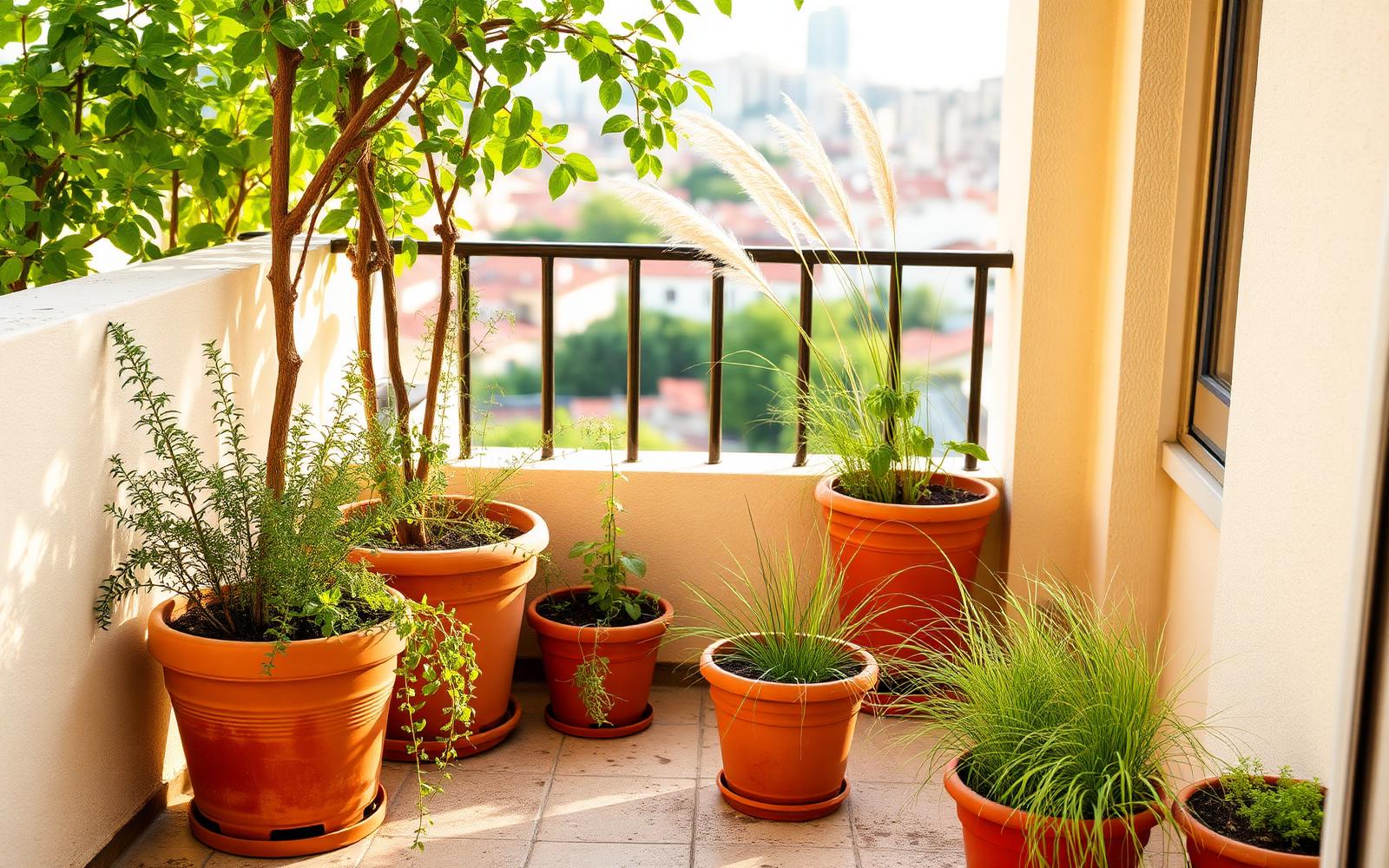
Balconies are hostile environments dressed up as gardens. They are windier than ground level, they bake in reflected heat off the building, and containers dry out in hours rather than days.
Plan for that and a balcony becomes the best room in a flat.
Weight comes first
Wet compost is heavy — roughly 700 kg per cubic metre. Keep the heavy things at the edges over the structural supports, not massed in the middle of the slab, and check your lease or building rules before installing anything substantial. Use lightweight peat-free compost blended with perlite, and choose fibreglass or plastic planters over concrete.
Choose plants for wind, not for looks
The best-looking balcony plant in the garden centre is often the first to shred. Reliable performers:
- Herbs: rosemary, thyme, sage, oregano — Mediterranean plants that expect heat, wind and poor soil.
- Grasses: stipa and carex move beautifully in wind instead of breaking.
- Structure: olive, pittosporum, dwarf pine.
- Colour: pelargoniums, salvia, erigeron, which flowers relentlessly and self-seeds into gaps.
Avoid large soft leaves — hostas, hydrangeas, most ferns — unless the balcony is genuinely sheltered.
Bigger pots, always
The single biggest mistake is small containers. A 40 cm pot holds enough compost to buffer a hot day; a 15 cm pot dries out by lunchtime. Fewer, larger pots beat many small ones every time, and they look better.
Watering that survives your holiday
- Mulch every pot with 30 mm of gravel or bark. This alone can halve water loss.
- Group pots together so they shade each other's sides.
- Install a battery timer on the tap if you have one, or a gravity drip system from a covered reservoir if you do not.
- Water deeply and less often — until it runs from the base — rather than a splash daily.
Making it a room
Screening on the windward side, a rug that tolerates rain, one weatherproof light on a timer, and a small table. Seating that stays out all year gets used; furniture that must be carried out does not.
If there is no ocean in sight, a well-planted balcony in the evening is a decent substitute.
- balcony
- plants
- containers
- small space